
Ever wondered how long is 100 feet really is in everyday life? You can know the number, but that does not always help you picture the actual distance. Maybe you are trying to imagine the length of a space, object, or area and the number still feels unclear. Without a ruler or measuring tool nearby, getting a quick sense of the size can be even harder.
That is where simple comparisons make a big difference. Instead of leaving you with a number that is hard to picture, this guide will help you see the length in a way that feels familiar. We will use common everyday things and easy real life comparisons to turn 100 feet into something you can actually imagine.
How Long Is 100 Feet Visually?
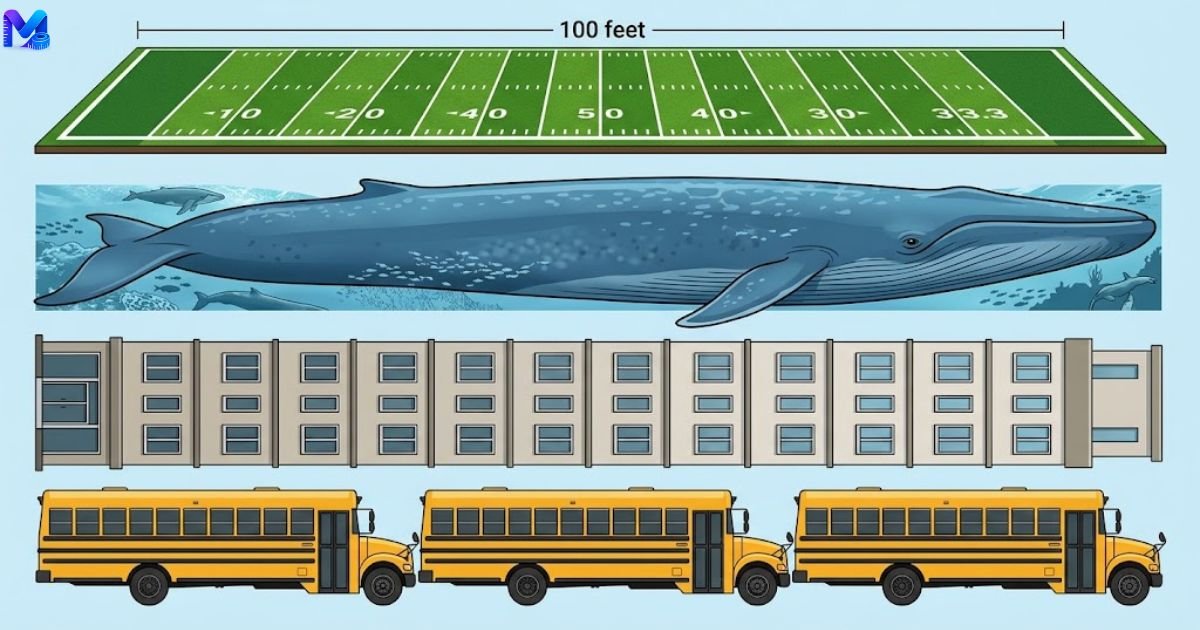
Picture a straight stretch of space about 30.48 meters from one end to the other. That is 100 feet. It is roughly one third of an American football field, making it long enough to feel significant even when viewed from a distance. 100 feet is equal to 120 lengths of 10 inches.
| Unit | Equivalent |
| Feet | 100 ft |
| Inches | 1,200 in |
| Yards | 33.33 yd |
| Meters | 30.48 m |
| Centimeters | 3,048 cm |
How Far Is 100 Feet to Walk?
Walking 100 feet usually takes about 30 to 40 steps for an adult, depending on your natural stride. It is equal to 30.48 meters, so the distance is short enough for a quick walk but long enough to clearly notice.
For an easy visual, imagine walking across a small parking area or along a straight sidewalk for roughly half a minute. Your exact step count and walking time can vary, but these comparisons give you a practical sense of how far 100 feet is.
How Long Is 100 Feet in Real Life?
- One Third of a Football Field: Imagine standing at one end of a 100 foot stretch and looking across about one third of a football field. It gives you a clear sense of the distance.
- Three School Buses: Put three full size school buses end to end. Their combined length comes close to 100 feet, making this an easy comparison to remember.
- Seven Cars in a Row: Around seven average cars placed bumper to bumper can cover roughly 100 feet. This helps you picture the distance on a road or parking area.
- About 30 to 40 Steps: Walk naturally in a straight line and count your steps. For many adults, reaching around 30 to 40 steps gives a useful feel for 100 feet.
How Long Is 100 Feet? 13 Common Things to Compare
One Third of an American Football Field
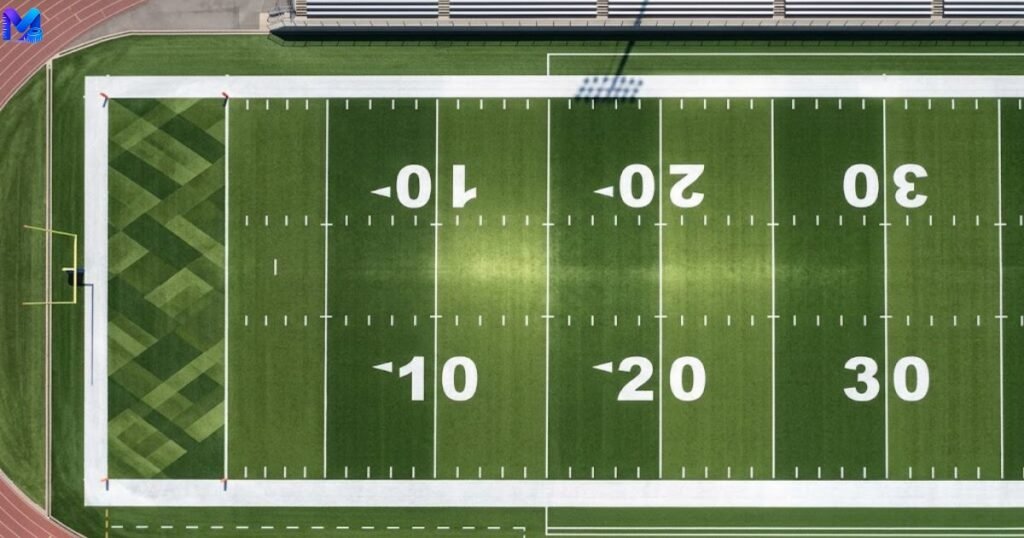
One third of an American football field is exactly 100 feet long between the goal lines. Since the full playing field is 300 feet, dividing it into three equal sections gives you a precise 100 foot distance.
A football field is used for playing American football, with yard lines helping players and officials track distance during the game. Those same markings make it easy to understand and estimate a 100 foot stretch in real life.
American football fields became more standardized during the 19th century as the sport developed in the United States. Today, the familiar 100 yard playing field remains one of the easiest historical measurements to recognize.
A Blue Whale

A blue whale can reach about 100 feet in length, with the largest individuals approaching or exceeding this size. So, a very large blue whale gives you a close real life comparison for 100 feet.
Blue whales use their huge bodies to travel across oceans and feed mainly on tiny krill. Their size allows them to store large energy reserves and travel long distances through the water.
Blue whales have lived in the world’s oceans for millions of years. They became famous for their extraordinary size, and they are still recognized as the largest known animals ever to live.
A 10 Story Building

A 10 story building can be around 100 feet tall, although its exact height depends on the height of each floor and the building design. It gives you a useful vertical idea of the measurement.
Buildings around this height can be used for homes, offices, hotels, and businesses. Looking from the ground to the roof gives you a strong sense of how far 100 feet can extend upward.
Tall buildings became much easier to construct during the late 19th century after steel framing and elevators improved. These changes helped cities build higher than traditional buildings could reach.
Three School Buses

Three full size school buses placed end to end can cover around 100 feet or slightly more. Because buses vary in size, this is an approximate comparison rather than an exact 100 foot length.
School buses are designed to transport students safely between their homes and schools. Three buses standing bumper to bumper create a surprisingly long line that makes 100 feet easier to imagine.
The familiar yellow American school bus became widely established during the 20th century. Its bright color was chosen to make buses easier to recognize and notice on roads.
A Mature Eastern Cottonwood Tree

A mature eastern cottonwood can grow to around 100 feet tall or higher. A large specimen can therefore give you a useful vertical comparison for the full 100 foot measurement.
These trees commonly grow near rivers, streams, and other wet areas. Their tall trunks and wide crowns provide shade and shelter for birds and other wildlife.
Eastern cottonwoods are native to North America and have long been part of river landscapes. Native peoples also used cottonwood wood and other parts of the tree for various practical and traditional purposes.
A Large Oak or Pine Tree
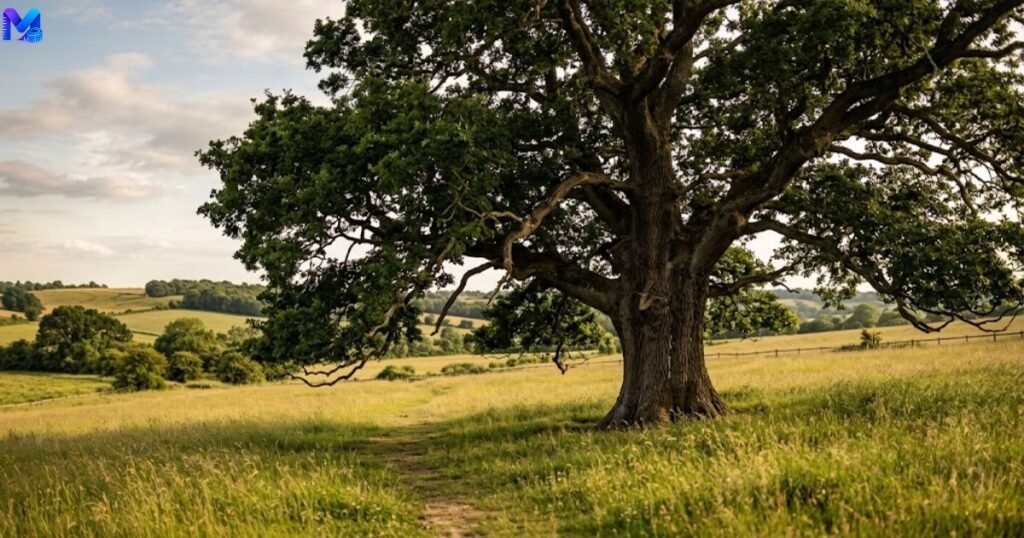
A large mature oak or pine tree can reach around 100 feet tall, depending on its species and growing conditions. It is an approximate comparison rather than an exact measurement.
These trees are important in forests because they provide food, shade, shelter, and nesting places for wildlife. A very tall tree also gives you a natural way to imagine 100 feet rising above the ground.
Oak and pine trees have a long history across North America and other parts of the world. Some individual trees can live for hundreds of years, giving them plenty of time to reach impressive sizes.
A Basketball Court Plus 6 Feet
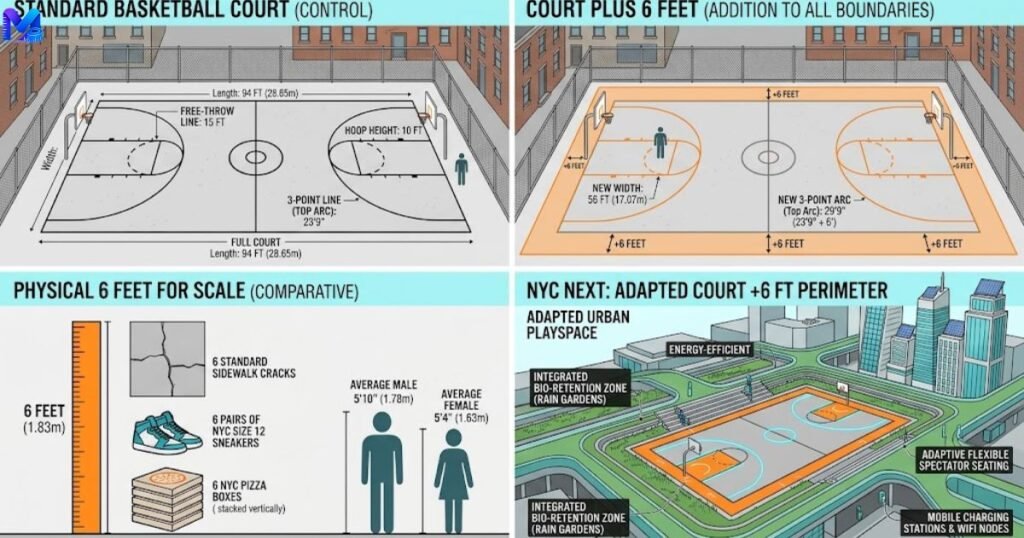
An NBA basketball court is 94 feet long, so adding exactly 6 feet makes 100 feet. This gives you an accurate way to picture the distance using a familiar sports court.
A basketball court gives players a fixed space for dribbling, passing, shooting, and defending. Walking from one baseline to the other and adding 6 feet creates a simple mental picture of 100 feet.
Basketball was invented by James Naismith in 1891 in Massachusetts. The original game was created for indoor exercise, and its courts and measurements became more standardized as the sport spread.
One and a Half Cricket Pitches
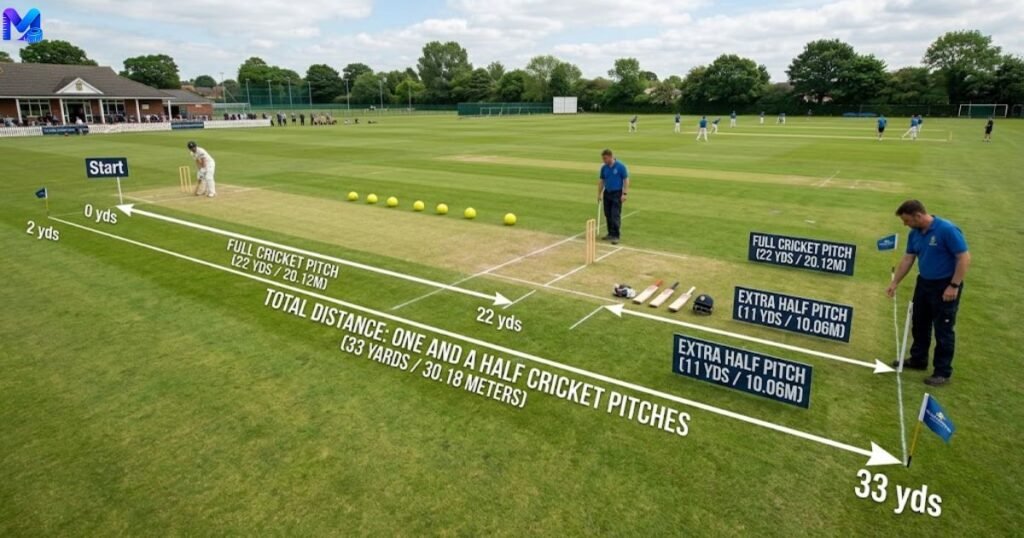
One cricket pitch is 66 feet long, so one and a half pitches measure 99 feet. That is only 1 foot shorter than 100 feet, making it an extremely close comparison.
The pitch is the central area where the bowler delivers the ball and the batter plays it. Imagining one full pitch plus half of another gives cricket fans an easy way to picture almost 100 feet.
Cricket developed in England over several centuries, with organized rules becoming more common during the 18th and 19th centuries. The 66 foot pitch became a standard part of the modern game.
61% of an Olympic Swimming Pool
An Olympic swimming pool is 50 meters long, or about 164 feet. A 100 foot distance therefore covers roughly 61% of its length, which is a little more than half the pool.
Olympic pools are designed for competitive swimming and are divided into marked lanes. Those lane markings give swimmers a clear path and also make the pool length easy to judge visually.
The modern Olympic swimming pool became standardized as competitive swimming developed. Today, the 50 meter pool is the standard long course size used in major international competitions.
Two Semi Trailers
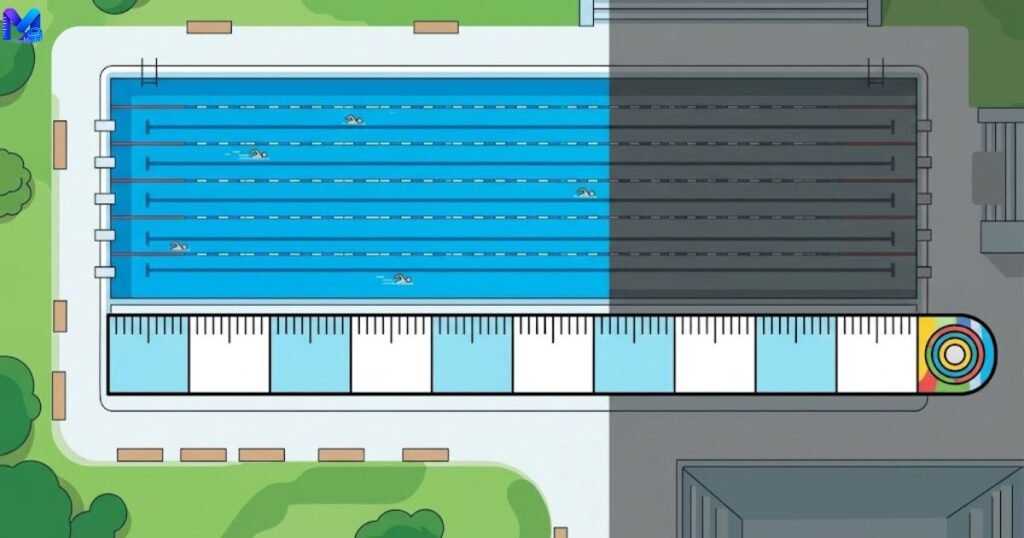
Two long semi trailers placed end to end measure about 106 feet, making them very close to 100 feet. A common long trailer is around 53 feet long.
Semi trailers are built to carry goods and products over highways and between cities. Two trailers lined up together show how much road space a 100 foot distance can cover.
Modern semi truck transportation developed during the early 20th century as motor vehicles began replacing older forms of freight transport. Trucks later became a major part of long distance shipping.
A Boeing 737 500 Wingspan
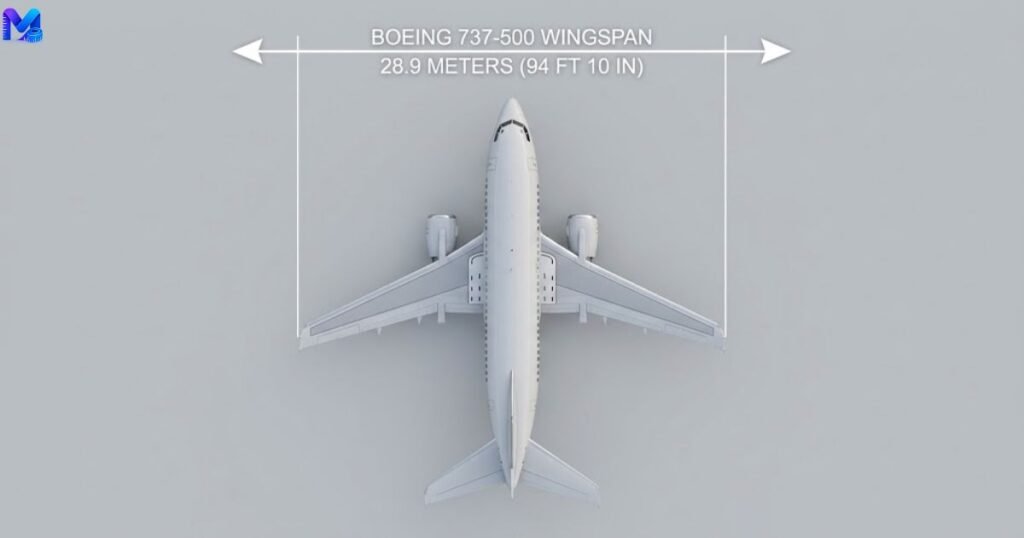
The Boeing 737 500 has a wingspan of about 95 feet, so it is roughly 5 feet shorter than 100 feet. The distance from one wingtip to the other is therefore a close comparison.
The wings provide the lift needed for the aircraft to fly and also influence how much space the plane needs at airports. Its nearly 100 foot span is a useful way to picture the width of a passenger aircraft.
The Boeing 737 family entered airline service in the 1960s and became one of the most widely recognized passenger aircraft families. The 737 500 was introduced later as a shorter version of the series
Seven Average Cars End to End
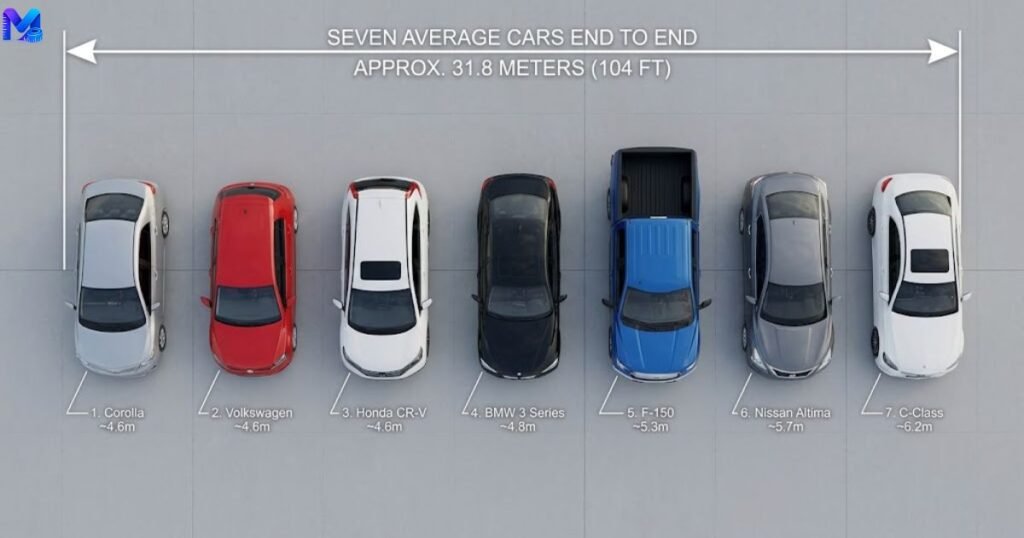
Seven average cars placed bumper to bumper can measure close to 100 feet, depending on the size of each vehicle. With cars commonly around 14 to 16 feet long, seven can span roughly 98 to 112 feet.
Cars are mainly used for personal transportation, but lining them up creates an easy visual measurement. Seven vehicles in one straight row would stretch much farther than a normal parking space.
The first practical automobiles appeared in the late 19th century, and mass production later made cars affordable for many more people. The automobile eventually changed travel, roads, and city life.
40 Average Adult Walking Steps
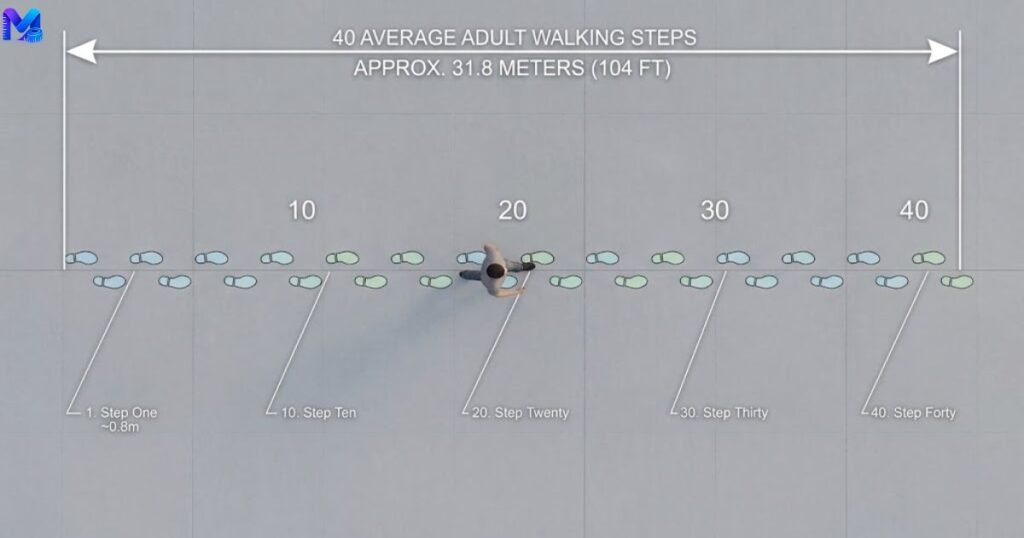
Around 30 to 40 normal adult steps can cover 100 feet, depending on a person’s stride. So 40 steps is a useful estimate, but it is not an exact measurement for every person.
Walking is used every day to move between homes, buildings, roads, parks, and other places. Counting your own steps can give you a quick idea of how far 100 feet feels without carrying a measuring tool.
People have estimated distance through walking steps for thousands of years, long before modern measuring devices became common. A person’s stride was a simple way to judge the length of a path or journey.
Conclusion
Now you can see how long is 100 feet beyond just a number. Familiar objects, spaces, and everyday comparisons turn this distance into something you can picture, estimate, and remember without reaching for a ruler or measuring tool.
The next time you walk, work, play, study, shop, or measure a space, you can use these simple comparisons to judge 100 feet with more confidence. If this guide helped you, leave a comment, share it, or pin it for later.
FAQ’S
Q.1How Many Car Lengths Is 100 Feet?
100 feet is roughly 6 to 7 average car lengths. Since most cars are around 14 to 16 feet long, seven cars placed bumper to bumper can come close to 100 feet.
Q.2How Many Meters Is One Hundred Feet?
One hundred feet equals exactly 30.48 meters. That means 100 feet is a little over 30 meters, making it easy to understand when switching between feet and metric measurements.
Q.3How Far Is 100 Feet in a Swimming Pool Relay?
In a 25 yard swimming pool, 100 feet is about 33.33 yards, so it is slightly longer than one pool length. In a 50 meter pool, it covers about 61% of the pool length.
Q.4How many steps is 100 feet?
100 feet is approximately 33 walking steps based on a 3-foot average stride. The exact number depends on your step length.
1 thought on “13 Common Things That Are 100 Feet (ft) Long”